
Article: Yunbenun: The First Peoples of Magnetic Island and the History We Rarely Hear
Yunbenun: The First Peoples of Magnetic Island and the History We Rarely Hear
Thousands of years of occupation, ancient connections to Country, forced removal and an enduring cultural legacy
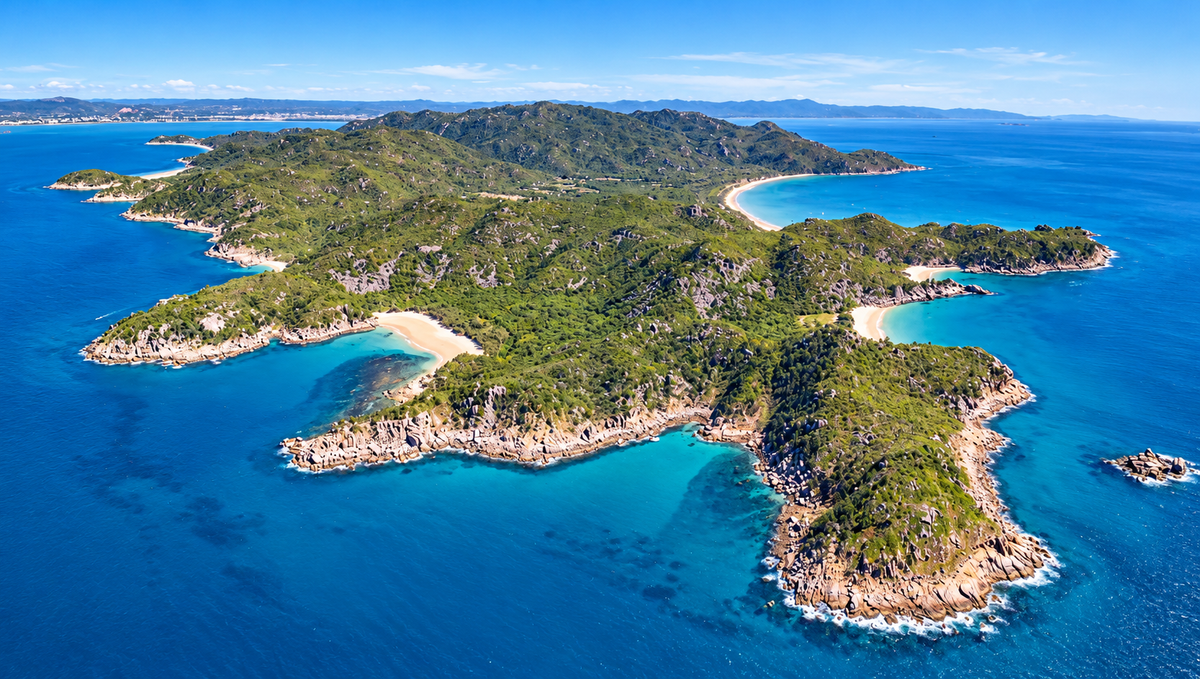
Before it became one of North Queensland’s most popular tropical island destinations, Magnetic Island was Yunbenun — the ancestral homeland of the Wulgurukaba people.
Its sheltered bays, granite headlands, freshwater creeks and surrounding seas sustained Aboriginal families for thousands of years. Yet fewer than 100 years ago, the island’s remaining Aboriginal residents were forcibly removed from their Country.
Today, visitors come to Magnetic Island for its beautiful beaches, abundant wildlife, coral reefs and spectacular national park landscapes. Most know the island by the name given to it by Lieutenant James Cook in 1770.
Far fewer know the remarkable and often tragic history of the people who lived here long before European arrival.
The island’s original name is Yunbenun, and its Traditional Owners are the Wulgurukaba people, whose ancestral Country encompasses the island, surrounding waters and parts of the nearby mainland.
Their story is one of ancient occupation, sophisticated environmental knowledge, enduring family connections and cultural survival in the face of colonial dispossession.
It is also a story that deserves to be much better known.
The Wulgurukaba people have occupied Yunbenun and the surrounding mainland for thousands of years.
Although archaeological research has not established a definitive date for the island’s earliest human occupation, abundant physical evidence confirms a long and sustained Aboriginal presence.
Throughout Yunbenun, archaeologists and Traditional Owners have identified shell middens, stone tools, rock paintings, ceremonial places, burial sites and traditional camping grounds.
These are not simply isolated remnants of occasional visits. Together, they reveal generations of people living on, travelling through and maintaining cultural relationships with the island.
The Queensland Government’s official history confirms that archaeological sites are particularly concentrated in sheltered bays facing the mainland and neighbouring islands.
These locations offered protection from prevailing winds, access to freshwater and proximity to abundant marine resources.
Importantly, the island was not an isolated Aboriginal outpost. It formed part of a much larger cultural landscape encompassing mainland Wulgurukaba Country and neighbouring islands.
The Wulgurukaba maintained connections to their Country through family relationships, ceremony, traditional knowledge and movement across land and sea.
Source: Queensland Government, The Wulgurukaba Yunbenun Story and Magnetic Island National Park Resource Information.
The Wulgurukaba are commonly known as the Canoe People, reflecting their longstanding maritime traditions and relationship with the waters surrounding Yunbenun.
Magnetic Island lies approximately eight kilometres off the coast of Townsville.
For its Aboriginal inhabitants, this stretch of sea was not a barrier separating them from the mainland. It was an important part of their Country.
Canoes enabled movement between Yunbenun and the mainland, maintaining relationships between families and communities.
Such journeys provided opportunities for exchanging resources, visiting relatives and participating in cultural activities.
The island’s sheltered bays offered suitable places for launching and landing watercraft, while established walking routes connected important locations across its rugged interior.
The Wulgurukaba creation story of Gabul, the great carpet snake, also connects Yunbenun with the mainland and the Palm Island group.
According to Wulgurukaba cultural knowledge, Gabul travelled across the landscape, shaping significant features of Country.
This story expresses the spiritual and cultural connections between places that European maps later separated into distinct geographical locations.
For the Wulgurukaba, land and sea were part of one interconnected ancestral homeland.
Source: Queensland Government, Connection to Country and Magnetic Island National Park Resource Information.
Evidence of Aboriginal occupation is found throughout Magnetic Island, particularly around its sheltered coastal bays.
The Wulgurukaba established camping places close to freshwater, food sources and accessible shorelines.
These were not necessarily permanent settlements in the European sense of fixed villages and houses. Rather, they were established living areas used repeatedly, with families moving between locations according to seasons, available resources and cultural responsibilities.
Some people lived on the island for extended periods, while others travelled between Yunbenun and the mainland.
The archaeological evidence indicates that the island supported a relatively permanent Aboriginal population, although no reliable estimate of its size before European settlement has been established.
Arcadia and Alma Bay
One particularly significant area of Aboriginal occupation was around present-day Arcadia.
Local cultural heritage research identifies important archaeological sites in this area, including shell middens, stone tools and rock paintings.
A substantial midden has been recorded near a freshwater spring or waterhole associated with a major creek.
The midden contains remains of oysters, pipis and mud mussels, together with stone artefacts.
These discoveries provide evidence of repeated food gathering, preparation and occupation.
The combination of reliable freshwater, sheltered beaches, surrounding bushland and abundant seafood would have made this an attractive place for Aboriginal families.
At least two important Aboriginal rock art sites have also been recorded in the Arcadia area.
Wulgurukaba Elders Brian and Lyle Johnson have contributed cultural knowledge to local heritage research documenting these places.
For people walking along Alma Bay today, it is worth remembering that this coastline was part of an Aboriginal living landscape long before the first holiday homes, roads and tourist facilities appeared.
Geoffrey Bay and Bremner Point
The coastline around Geoffrey Bay and Bremner Point also forms part of the culturally significant Wulgurukaba landscape.
Bremner Point is associated in local accounts with Gabul, the ancestral carpet snake.
The granite headlands and coastal formations are therefore more than striking natural features. They form part of a living cultural landscape connected to Wulgurukaba creation traditions.
Nelly Bay
Nelly Bay contains some of the island’s most significant archaeological evidence.
In 1988, more than 1,500 Aboriginal artefacts were discovered in the area.
These findings demonstrated the cultural and archaeological importance of a place subsequently threatened by major marina development.
The discoveries also became central to a prolonged struggle by Wulgurukaba Traditional Owners to protect their cultural heritage.
Other areas of occupation
Aboriginal cultural heritage has also been recorded in other parts of the island, including Horseshoe Bay, Picnic Bay and Florence Bay.
Together, these places reveal an extensive pattern of Aboriginal occupation and movement across Yunbenun.
They also demonstrate that the island’s history cannot be understood simply by looking at its modern townships.
Sources: Arcadia CoastCare, Traditional Owners of Yunbenun; Queensland Government, Forging a Path Forward; Magnetic Island National Park Resource Information.
For thousands of years, the Wulgurukaba sustained themselves through an intimate knowledge of Yunbenun’s natural environment.
The surrounding waters provided fish, shellfish and other marine foods.
The island’s woodlands, coastal vegetation and seasonal freshwater sources provided additional food, medicines and materials.
Shell middens offer particularly tangible evidence of this way of life.
Over generations, the discarded shells from meals accumulated in particular locations, creating archaeological deposits that now reveal where people gathered, ate and lived.
Stone artefacts provide further evidence of everyday activities, including the manufacture and maintenance of tools.
Traditional walking paths connected places where resources could be obtained.
Wulgurukaba ecological knowledge also reflects an understanding of seasonal changes.
Rather than relying on the conventional European calendar, traditional seasons were recognised through environmental indicators, including flowering plants, animal breeding patterns and the movements of birds and marine life.
This knowledge was developed and transmitted across generations.
It enabled people to live with the island’s changing conditions while maintaining cultural responsibilities to Country.
The Wulgurukaba relationship with Yunbenun was never simply about extracting resources.
It was, and remains, a relationship encompassing spiritual beliefs, ancestral connections, responsibilities and belonging.
Source: Queensland Government, Traditional Knowledge, 28 February 2025.
On 6 June 1770, Lieutenant James Cook sailed past the island aboard HMS Endeavour.
He named it Magnetic Island after believing that the island’s landmass had affected his ship’s compass.
The name endured, eventually replacing Yunbenun on European maps and in official usage.
However, the more devastating consequences of colonisation emerged almost a century later.
In 1864, European colonists established a settlement and port in the Townsville region to service North Queensland’s expanding pastoral industry.
The Wulgurukaba people were already living throughout this coastal Country.
As settlement expanded, colonists sought control of land and access to coastal resources.
According to the Queensland Government’s official account, the invaders used firearms, threats and intimidation to drive Wulgurukaba people away from coastal areas.
Traditional access to land and resources was progressively restricted.
Violent confrontations, introduced diseases and the destruction of traditional food sources further disrupted Aboriginal life.
Nevertheless, the Wulgurukaba continued maintaining their traditional lifestyle into the late nineteenth century.
On Yunbenun, Aboriginal families remained despite the growing European presence.
Their eventual departure was not voluntary.
Source: Queensland Government, Forced off Country, 28 February 2025.
Perhaps the most confronting aspect of Magnetic Island’s Aboriginal history is how recently its original inhabitants were forcibly removed.
Wulgurukaba families continued living on Yunbenun until the 1920s and 1930s.
This was not an ancient population that mysteriously vanished before European settlement.
These were families with homes, children, relatives, cultural responsibilities and ancestral connections to the island.
They were removed under Queensland’s discriminatory Aboriginal protection system.
The Aboriginals Protection and Restriction of the Sale of Opium Act 1897 and subsequent legislation gave government authorities extensive powers over Aboriginal people’s movements, employment, family relationships and places of residence.
From 1897 until 1969, Wulgurukaba people were among the Aboriginal Queenslanders forcibly relocated to government-controlled reserves and missions.
People were separated from their Country, and in many cases from their families.
Some were sent hundreds of kilometres away.
Others were taken to mainland settlements before being transferred elsewhere.
The consequences extended far beyond physical displacement.
Removal disrupted the transmission of cultural knowledge, separated generations and restricted people’s ability to fulfil their responsibilities to ancestral Country.
Wulgurukaba Elder Lyle Johnson describes the history plainly:
“Our people were forced off this Country. They didn’t leave willingly.”
Those words challenge any suggestion that Magnetic Island’s Aboriginal population simply moved away as European settlement progressed.
They were dispossessed.
Source: Queensland Government, Forced off Country, 28 February 2025.
The Queensland Government’s Wulgurukaba history project documents the experiences of four important ancestral family lines.
These accounts give names, relationships and personal histories to what might otherwise be presented merely as an administrative process of removal.
The White family
Jimmy White was a Wulgurukaba ancestor who was removed from Yunbenun and taken to Aboriginal camps at Rowes Bay in Townsville.
His son, Alec White, was subsequently forcibly relocated from Townsville to Palm Island in the late 1930s.
There, Alec lived alongside Manbarra people, strengthening relationships that continue between their descendants.
The Underwood family
Emily Magnetic grew up on Yunbenun.
She married James, a lighthouse keeper, and the family later moved to Lizard Island.
Their lives were subsequently disrupted by forced removals and family separation.
Some relatives were sent to Cooktown and overseas.
Emily herself was transported by boat to the government-controlled Aboriginal settlement at Yarrabah, south of Cairns.
Her descendants continue to maintain their Wulgurukaba identity and connection to Yunbenun.
The Ambrym family
Hilda Ambrym was Emily Magnetic’s sister.
She too was removed from Country and sent to Yarrabah.
Hilda was eventually granted an exemption allowing her to leave the mission and return to the Townsville region.
She spent the remainder of her life in Townsville.
Her descendants continue to remember her life and connection to Magnetic Island.
The Hegarty family
Peter Hegarty was another important Wulgurukaba ancestor.
His family had connections throughout the Townsville, Bowen and Burdekin regions.
In 1911, Peter, his wife and children were removed from Townsville.
They were transported by boat to Maryborough and subsequently sent to Barambah, now known as Cherbourg.
These family histories demonstrate the enormous geographical distances created by forced removal.
People whose ancestral connections were centred on the Townsville region and Yunbenun were dispersed across Queensland.
Yet their descendants maintained their identities and continued passing down their family histories.
Source: Queensland Government, Forging a Path Forward, 28 February 2025.
The struggle for recognition and protection of Wulgurukaba heritage continued long after the forced removals.
One of the most significant confrontations occurred during the development of the Magnetic Quays marina at Nelly Bay.
The project was announced in 1984.
Wulgurukaba Traditional Owners, local residents and environmental organisations opposed the development because of its environmental and cultural impacts.
In 1988, more than 1,500 Aboriginal artefacts were discovered in the area.
Despite the site’s significance, construction eventually proceeded.
In July 2001, the skeletal remains of a Wulgurukaba woman were unearthed during excavation.
The remains were estimated to be approximately 150 to 200 years old.
According to the Queensland Government’s account, bones had been disturbed and dispersed across the construction area before the burial was reported.
Excavation continued even after the discovery.
Wulgurukaba people sought legal intervention to stop the work and recover their ancestor’s remains.
They successfully secured a temporary halt to excavation.
For Traditional Owners, this was not simply a dispute about archaeological material.
It concerned the dignity of an ancestor, the protection of a burial place and their right to speak for Country.
The events at Nelly Bay became an important catalyst in the continuing struggle for formal recognition of Wulgurukaba cultural rights.
Source: Queensland Government, Forging a Path Forward, 28 February 2025.
Despite generations of displacement, the Wulgurukaba never relinquished their connection to Yunbenun.
Their descendants continued advocating for recognition, cultural heritage protection and meaningful involvement in the management of their ancestral lands.
In 1994, the Wulgurukaba Aboriginal Corporation was formally established.
In 1996, the first Wulgurukaba person began working as a ranger with Queensland Parks and Wildlife Service on Yunbenun.
A significant milestone followed in 2009, when an Indigenous Land Use Agreement was established between the Wulgurukaba people and the Queensland Government.
The agreement recognised Wulgurukaba interests in the management of protected areas on the island.
In 2012, a bushland property known as The Sticks, on the island’s western side, was returned to the Wulgurukaba people.
Further progress came in 2022, when a Memorandum of Understanding formalised an ongoing partnership between the Wulgurukaba and Queensland Parks and Wildlife Service.
Today, approximately 78 per cent of Magnetic Island is protected as national park or conservation park.
Wulgurukaba people participate in caring for this Country through ranger programs, cultural heritage protection and collaborative land management.
Their traditional ecological knowledge contributes to contemporary conservation practices.
Importantly, the Wulgurukaba are not simply being acknowledged as part of the island’s past.
They remain its Traditional Owners, with continuing cultural responsibilities and an enduring connection to their ancestral Country.
Source: Queensland Government, Forging a Path Forward and Magnetic Island National Park Resource Information.
For many visitors, Magnetic Island’s history begins with Captain Cook, early European settlement, tourism development or the construction of military fortifications during the Second World War.
Yet these events represent only a brief chapter in the island’s human history.
Long before Cook’s arrival, Wulgurukaba families were living along the island’s sheltered beaches, collecting seafood, manufacturing tools, travelling between island and mainland, sharing cultural knowledge and maintaining their responsibilities to Country.
The archaeological evidence remains embedded in the landscape.
Shell middens survive near coastal living areas.
Stone artefacts record generations of human activity.
Rock paintings and ceremonial places preserve evidence of cultural traditions.
Ancestral burial places remind us that generations of Wulgurukaba people lived and died on Yunbenun.
Some sites remain culturally sensitive, and their protection requires respecting the wishes and authority of Traditional Owners.
For those who live on or visit Magnetic Island, understanding this history fundamentally changes how the landscape is experienced.
Alma Bay is not simply a beautiful swimming beach.
Geoffrey Bay is not merely a place to snorkel.
Nelly Bay is not just a ferry terminal and marina.
These places form part of an ancient and continuing Aboriginal cultural landscape.
There is something particularly confronting about the timeline of Aboriginal history on Magnetic Island.
European settlement of Townsville began in 1864.
Yet Wulgurukaba families continued living on Yunbenun for decades afterwards.
Some remained until the 1920s and 1930s.
That means the final forced removals occurred within the last century.
The descendants of those who were taken away are alive today.
Their family histories are not distant legends. They are accounts of parents, grandparents and great-grandparents whose lives were profoundly affected by government policies.
The removal of Aboriginal families from Magnetic Island was part of a much broader colonial system that displaced First Nations peoples throughout Queensland.
But the story does not end with removal.
The Wulgurukaba survived.
They maintained their family connections, cultural identities and responsibilities to Country.
They challenged the destruction of ancestral sites.
They fought for recognition.
They returned to care for their homeland.
And today, their voices are increasingly central to the protection and management of Yunbenun.
Magnetic Island’s Aboriginal history is not merely a fascinating addition to its tourism story.
It is fundamental to understanding the island itself.
For thousands of years, Yunbenun was home to Aboriginal families whose lives were intimately connected with its beaches, forests, freshwater creeks, granite mountains and surrounding seas.
Colonisation disrupted those lives and ultimately forced families from their ancestral homeland.
But it did not erase their identity, their history or their connection to Country.
The Wulgurukaba remain the Traditional Owners of Yunbenun.
Their culture is living, their ancestral connections endure, and their responsibilities to Country continue.
The island was never an empty wilderness waiting to be discovered.
It was already home.
And it remains Wulgurukaba Country.

SOURCES AND FURTHER READING
The following sources provide historical records, archaeological information and Wulgurukaba perspectives on the island’s history.
1. Queensland Government — The Wulgurukaba Yunbenun Story (2025)
A collection of Wulgurukaba cultural knowledge and family histories published with the consent of Traditional Owners.
2. Queensland Government — Forced off Country (2025)
Documents European colonisation, the displacement of Wulgurukaba people and their forced removal from Yunbenun during the twentieth century.
3. Queensland Government — Forging a Path Forward (2025)
Details Wulgurukaba family histories, the Nelly Bay cultural heritage dispute, ancestral remains, and the continuing struggle for recognition and protection of Country.
4. Queensland Government — Connection to Country (2025)
Presents Wulgurukaba perspectives on cultural identity, spiritual connections, Gabul and the responsibilities of Traditional Owners.
5. Queensland Government — Traditional Knowledge (2025)
Explores Wulgurukaba environmental knowledge, seasonal observations and traditional relationships with the island’s natural resources.
6. Queensland Department of Environment — Magnetic Island National Park Resource Information
Provides background on the island’s natural and cultural heritage, archaeological evidence, Wulgurukaba history and contemporary land management.
7. Arcadia CoastCare — Traditional Owners of Yunbenun
Local heritage information developed with contributions from Wulgurukaba Traditional Owners, including Brian and Lyle Johnson. Documents significant Aboriginal cultural sites around Arcadia, including shell middens, rock art and freshwater-associated occupation areas.
8. Queensland Government — Magnetic Island National Park: Nature, Culture and History
Official overview of Yunbenun’s Aboriginal heritage, colonial history and ongoing Wulgurukaba custodianship.
Acknowledgement: This article acknowledges the Wulgurukaba people as the Traditional Owners of Yunbenun and pays respect to their Elders, past and present. It draws on publicly available historical research and cultural information shared with the consent of Wulgurukaba custodians.
Aboriginal and Torres Strait Islander readers are advised that this article contains the names of deceased persons.